
Power Checkup
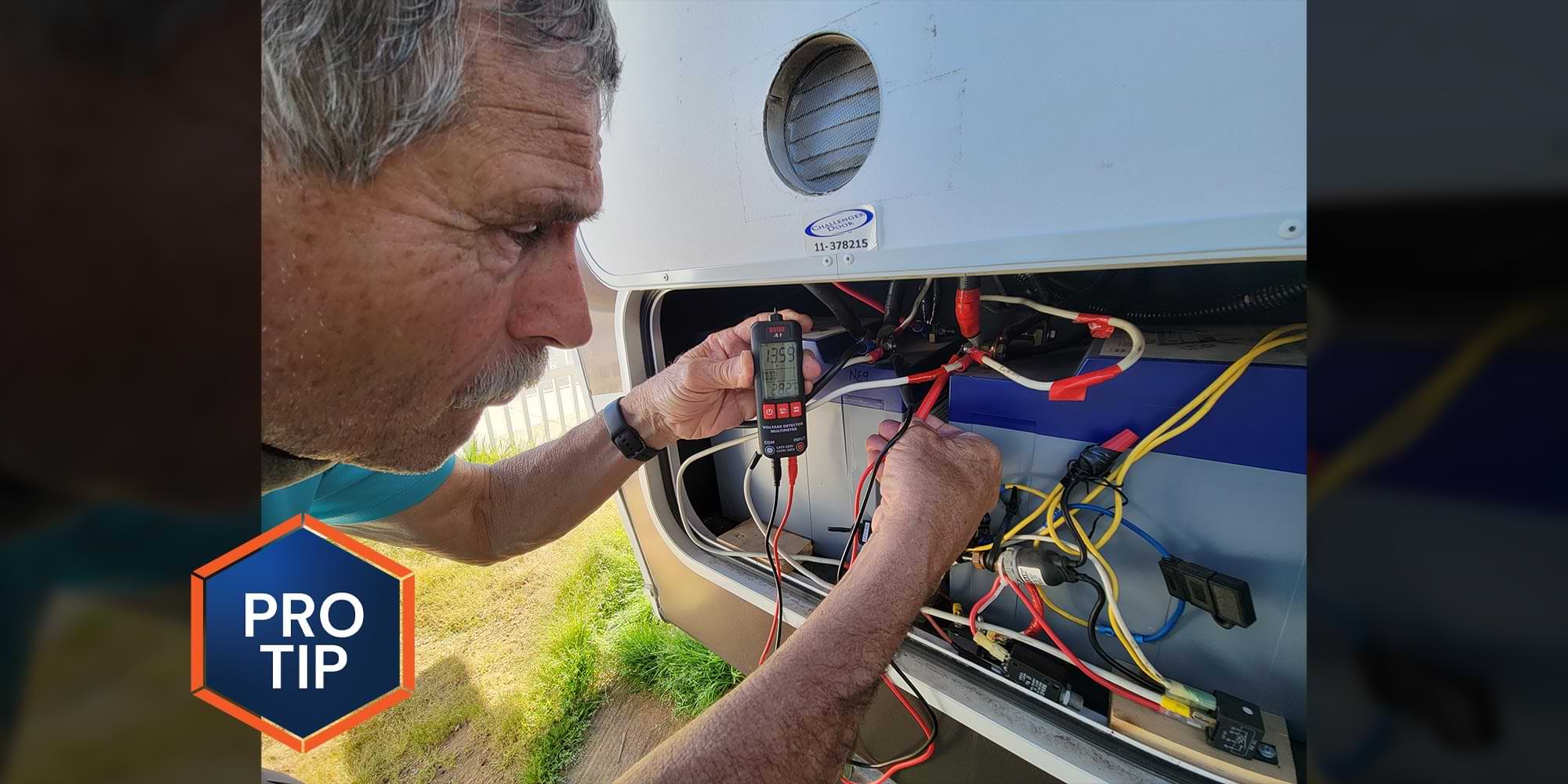
If you own an RV, you’ll have to keep tabs on the electrical system. Many owners have multimeters and some kind of test light to establish power in a fixture or wire. Multimeters come in a variety of levels, from very basic models to professional devices with induction provisions for testing 12-volt DC and 120-volt AC circuits. Even though I’m an RV technician, I always know that Murphy’s Law will crop its ugly head at times, and I keep a pro-grade multimeter in my tool arsenal. Still, I’m always on the hunt for simple meters that I can grab for a quick test — especially when on the road.
Those of us who spend time online are always discovering new products that can make life on the road easier. Perusing Amazon (which I do often), I found an “A1 Fully Automatic Anti-Burn Intelligent Digital Multimeter” that looked interesting. The Bside-branded meter is only $26.99 on Amazon and its credentials were pretty wild for such a cheap device, which is not uncommon these days for products manufactured in China.
As soon as I opened the box, I could tell this three-in-one “fully automatic” meter might be kind of handy. The anti-burn feature means that if you touch the wrong voltage, it’s not going to burn up the device. The three-function LED screen is fairly easy to read, though it’s small. It even has a flashlight for testing circuits in dark places, like the breaker/distribution panel.

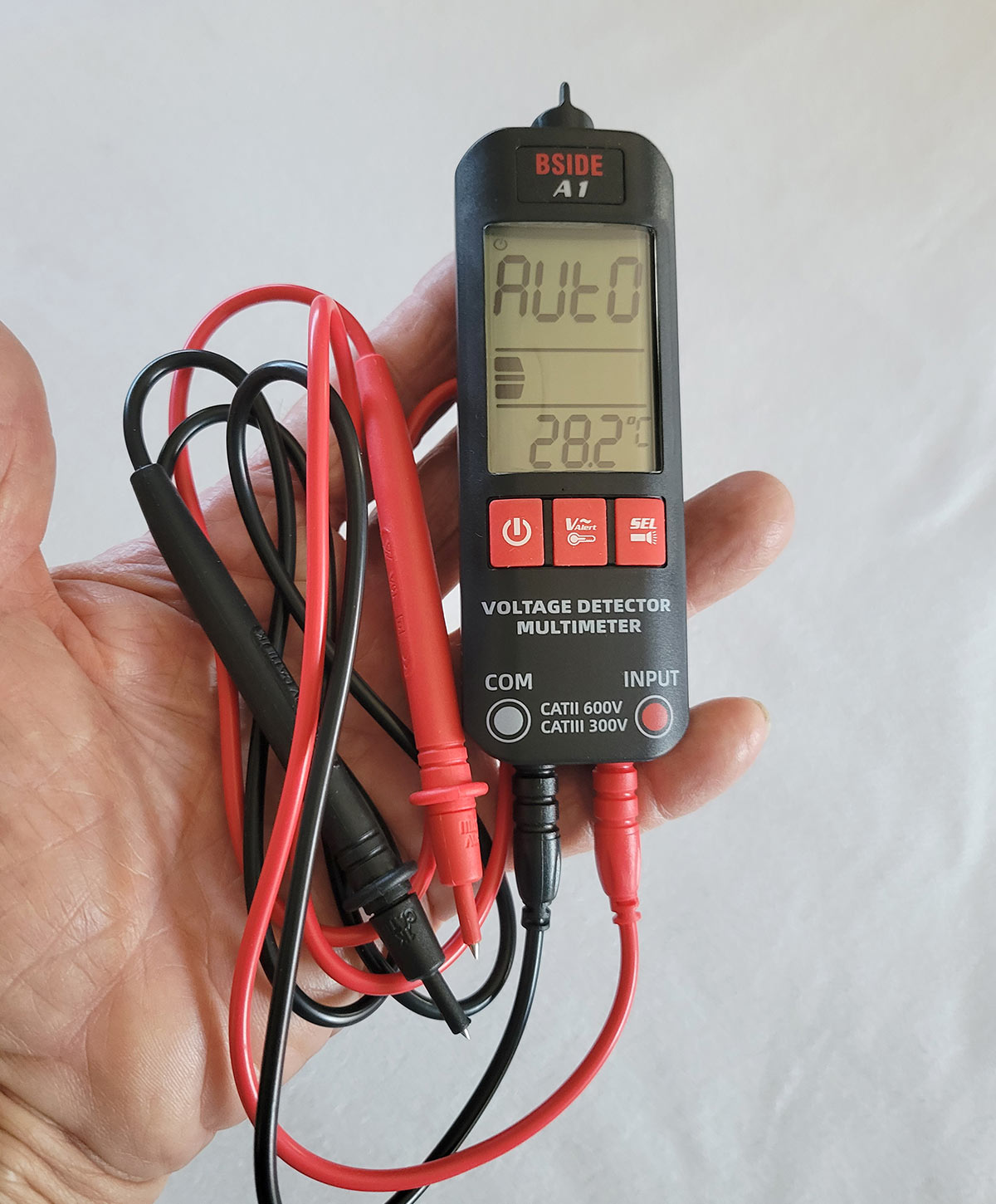
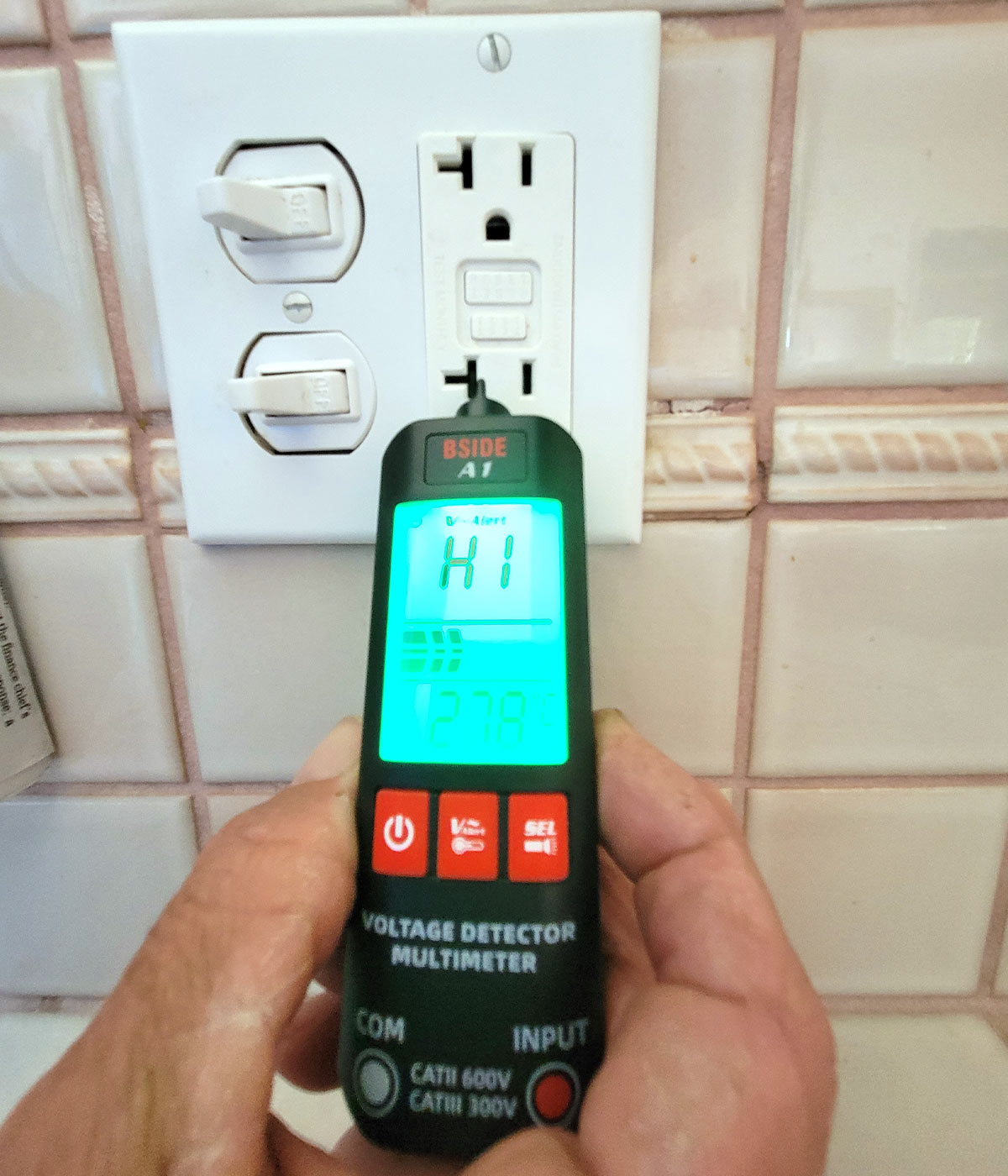
Using the automatic 120-volt AC metering is simple, but the probe leads are required to read 12-volt DC power. Also, the instructions are rather vague; however, the video (on the Amazon product page) gives a bit more information. Basically, you turn it on and push the function button for options. All I did on the first try was get close to a 120-volt AC outlet and the screen automatically showed high voltage on the black (hot) wire side of the outlet and low voltage on the white (common) wire side. If you hold the meter near the circuit breakers, for example, it will show if any one or more are defective.
This diminutive multimeter also beeps when it detects voltage, which at some point could be handy if you can’t see the screen. Because it has high- and low-voltage detection, you can also check for reverse polarity. And, this meter will also quickly determine whether the ground fault circuit interrupter (GFCI) is defective. It’s also capable of checking resistance and continuity — and the probe leads can be used to check for 12-volt DC power. Testing battery voltage, I found the Bside meter to be as accurate as a Fluke multimeter. To verify that it would find a broken circuit, I cut an extension cord wire, taped it up and plugged it into a 120-volt AC wall outlet. When I ran the meter along the outside of the cable, the beeping ceased and the light turned off at the marked break in the wire.

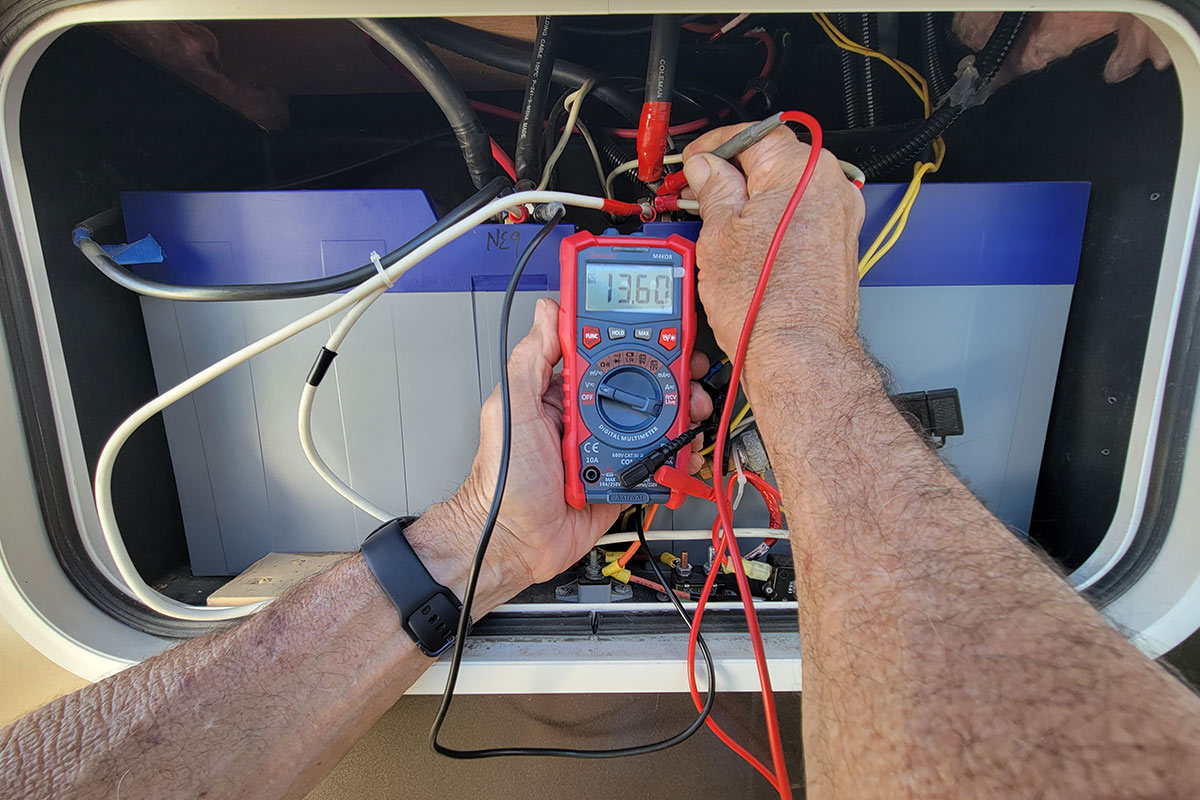
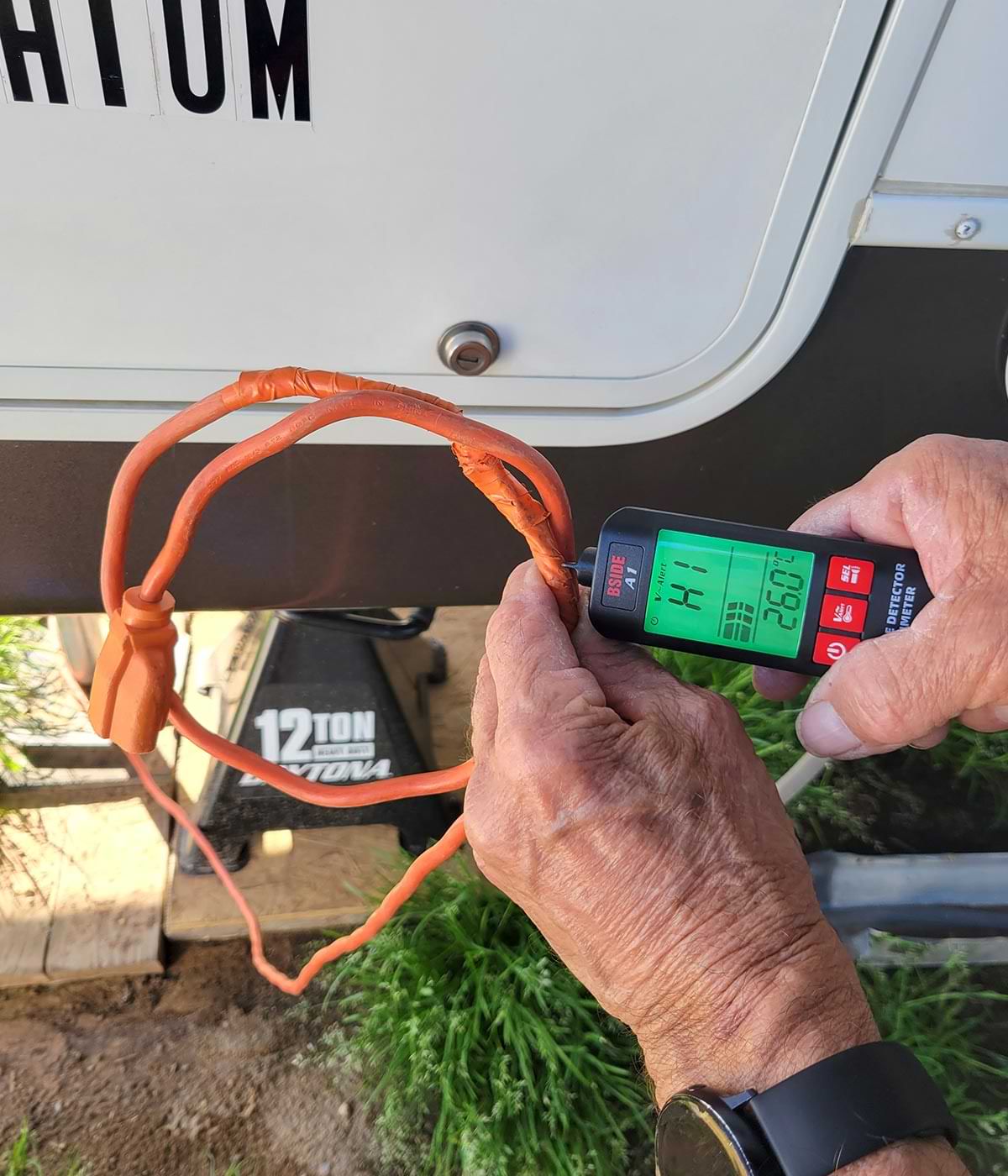
For the price, I don’t think that you can go wrong with this handy meter. It fits in the palm of your hand and comes with a nice case that zips closed so you can put it in your pocket or leave it in the glove box. Although my Fluke digital multimeter will pretty much test anything from a diode to a 9-volt battery, I’m pretty sure I’m going to be using this one more often for diagnosing basic electrical issues.

Already a Subscriber? Click here for Access to the Full Issues.