
That’s Using Your Noodle
I also use cut pieces of this foam to protect strap buckles from scratching furniture, hold open refrigerator doors while in storage and protecting dining chairs from marking up adjacent structures while on the road. There are literally dozens of uses for these versatile foam tubes around camp.

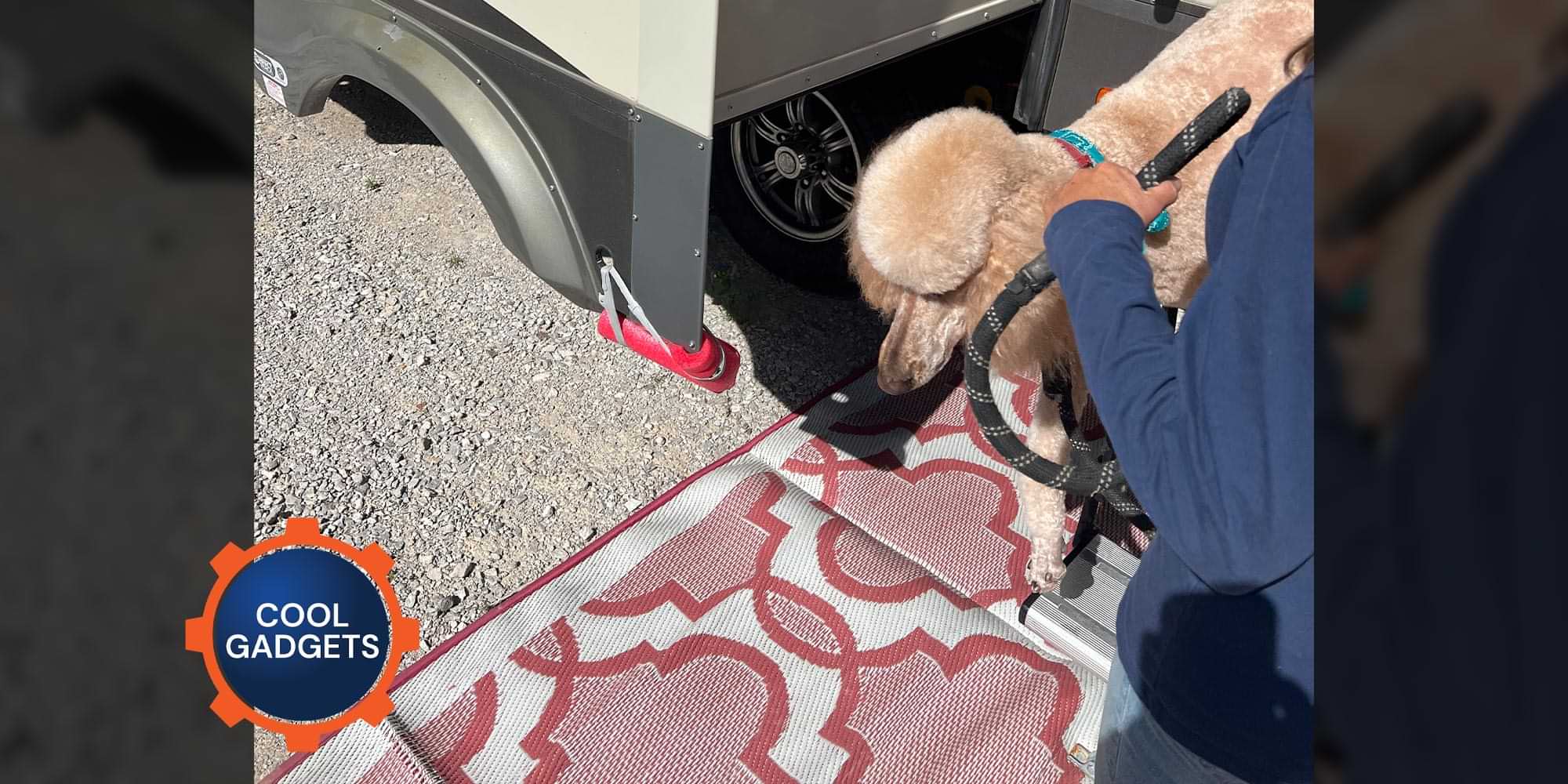
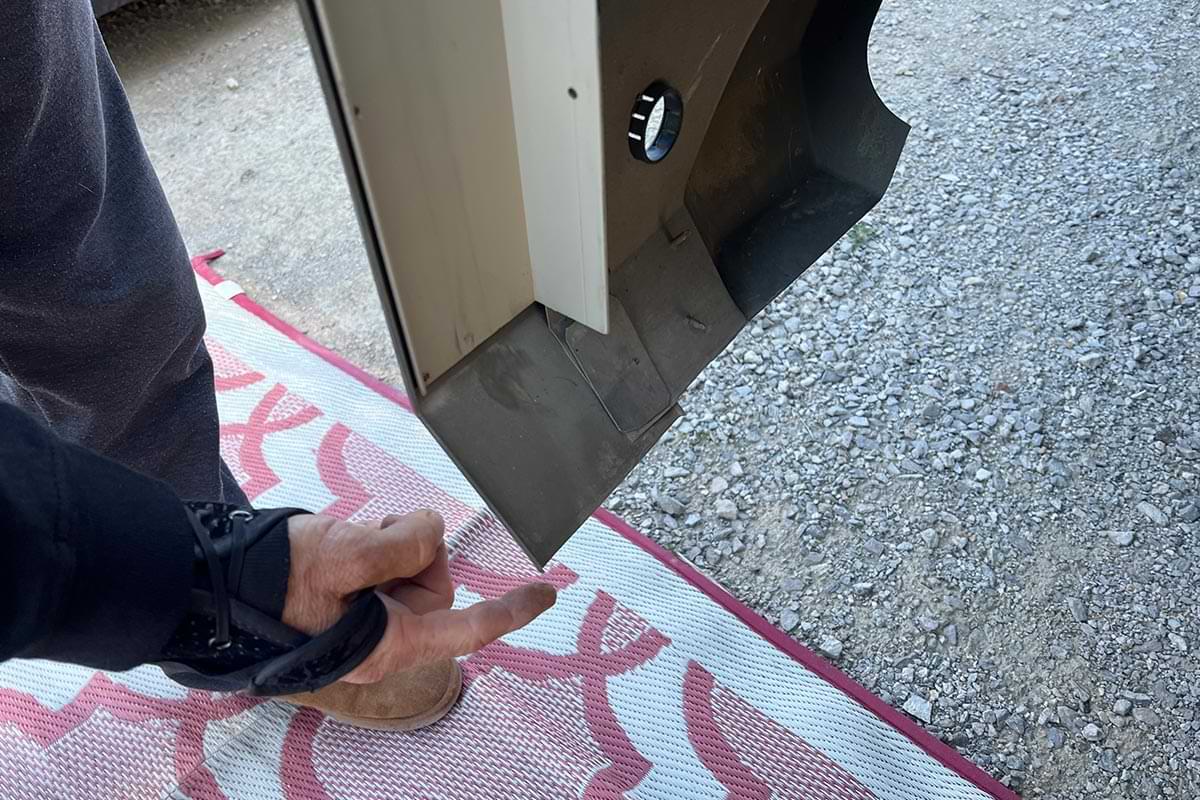
I stumbled on another use when I realized that the sharp corner of the slide-out near the entry door and steps presented a hazard to my dog when exiting the fifth wheel. These corners are razor-sharp and if my standard poodle leaps off the steps too close to the slide-out corner and contacts this point, her skin can be cut. Covering the sharp edge of the slide-out skirting with a swim noodle provides a soft barrier and the confidence that my dog can safely exit the fifth wheel.
Swim noodles come in a number of colors and are inexpensive, especially if you buy them at places like one of the “dollar” stores. While it’s possible to find fancier and stouter swim noodles, the ones RVers use are usually a little longer than 4 feet and are made of lightweight foam, making them easy to cut. You can usually find them for a couple bucks each, depending on the store; they are also available from multiple Internet sellers.

I prefer the red swim noodles because they are easier to see and, hopefully, bright enough to help you remember to remove them before closing the slide-out(s).
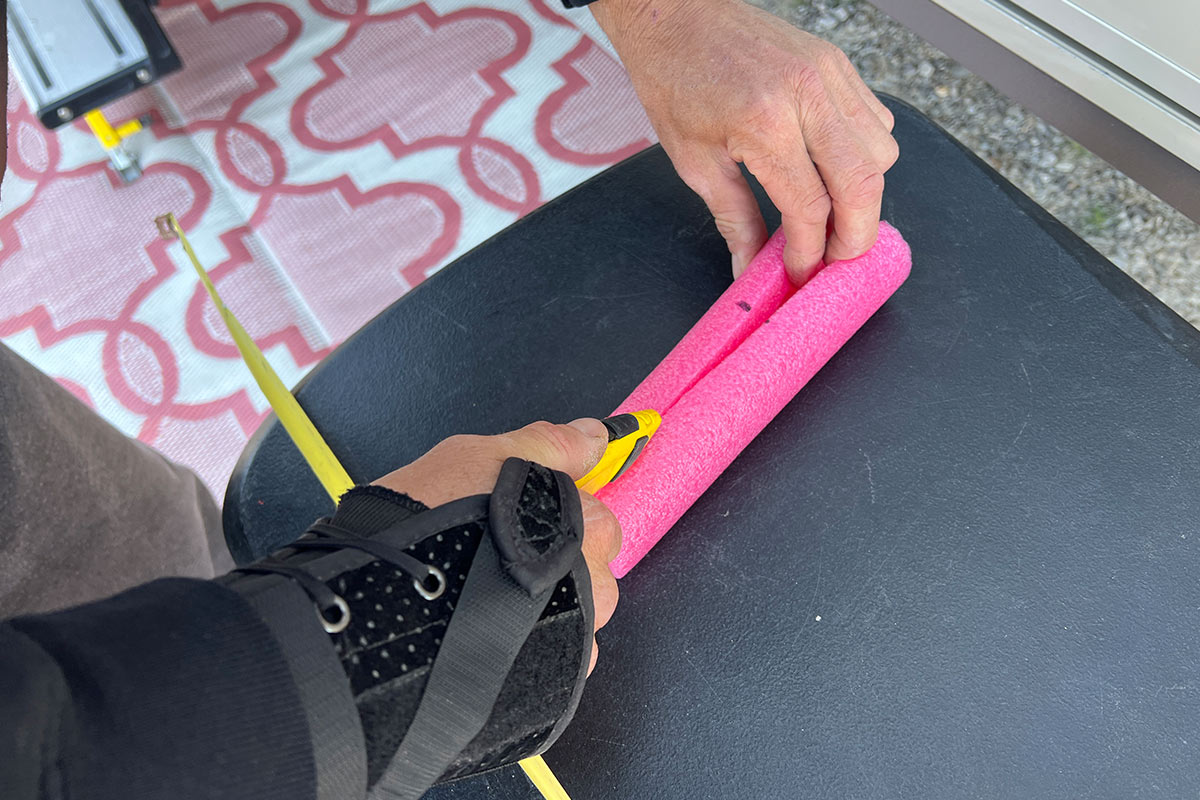
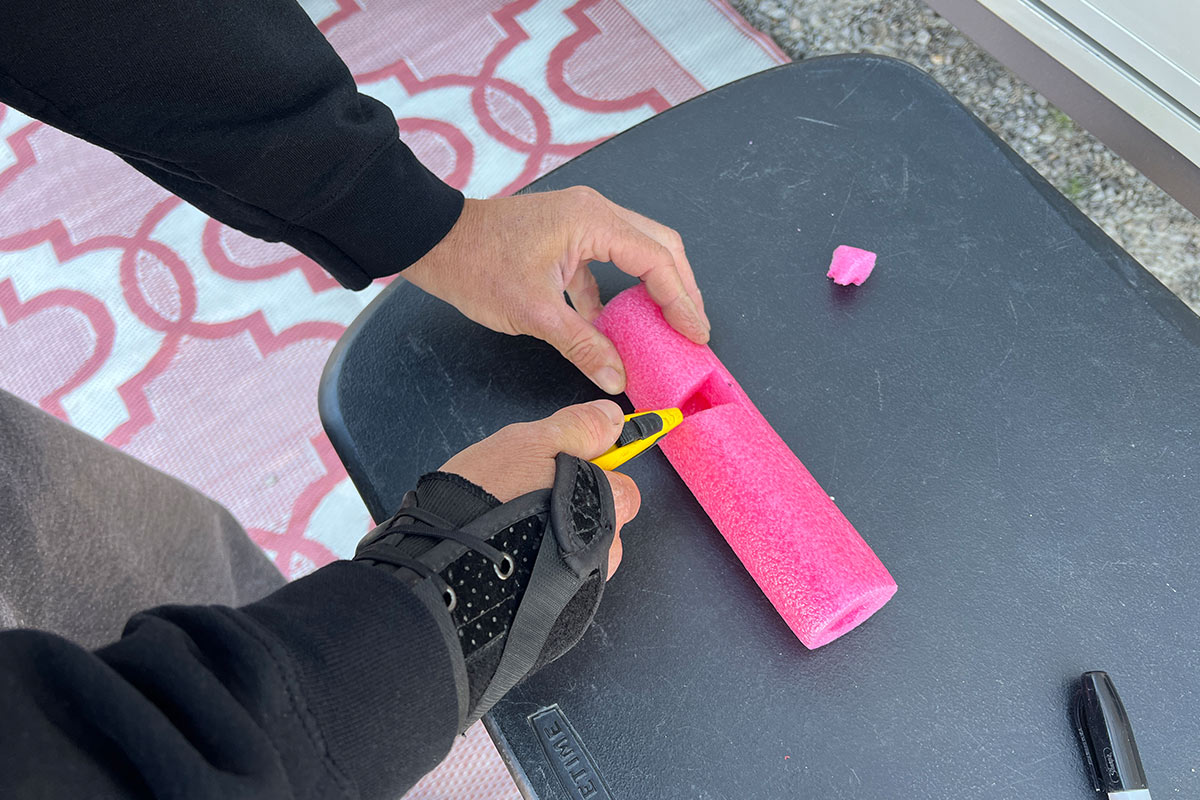
Most of the time, the noodles can be cut to length and sliced down the middle with a razor knife so they can be press-fit over the edge of a slide-out corner. Since the pooch may come in contact with the noodle, it needed to be secured rather than just rely on friction to keep it from falling off. For this challenge, I turned to one of my favorite organizational products: narrow 8-inch, Velcro Brand One-Wrap hook-and-loop ties (available at Amazon for $6.27 for a package of 25 gray and 25 black straps).
For this project, simply measure the area to be covered by the swim noodle and cut it to size. Here, the vertical and horizontal edges are 5 and 8 inches, respectively. To keep the swim noodle in place, multiple lengths of the hook and loop straps were connected and threaded through an existing hole and around the noodle in two places. Fortunately, this hole, which provides access for a tool that can be used to manually open and close the slide-out, already existed. If not, a ½-inch hole can be drilled through the skirting and a grommet can be installed. It only takes a minute or two to place the swim noodle on the edges and strap it down. If you forget to remove it before retracting the slide, which is bound to happen at least once, the skirting should be flexible enough to prevent damage — but don’t make a habit out of it.



By the way, the hook-and-loop straps can also be used to secure power cables, water hoses and charging cords, to name a few. They are my go-to implement for organizing items inside the fifth wheel and in the exterior storage compartments — and they are reusable.
Already a Subscriber? Click here for Access to the Full Issues.